
Tyvek® Snow Farming: Protecting Snow and Glaciers in Switzerland
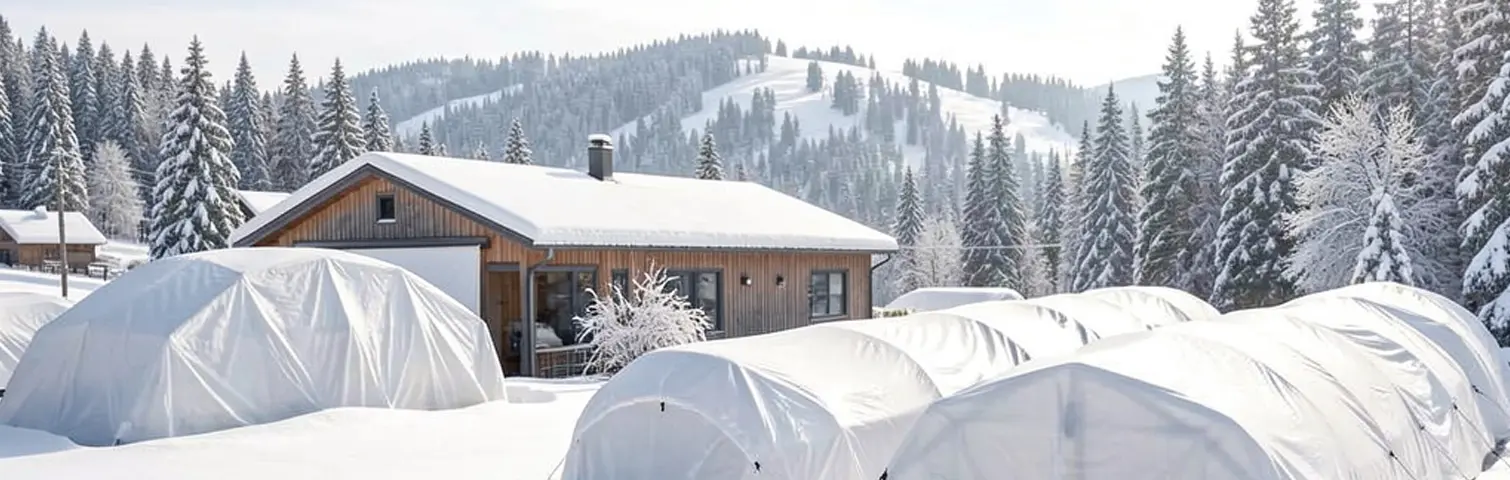
Tyvek®: a technical material for snow management and glacier protection
DuPont™ Tyvek® is a high-performance nonwoven material made from high-density polyethylene (HDPE) fibers. Originally developed for demanding industrial applications, it is now used in many fields such as construction, industrial protection, technical packaging, and outdoor applications exposed to extreme weather conditions.
Thanks to its unique combination of light weight, mechanical strength, and durability, Tyvek® is also a suitable material for certain applications related to snow management (snow farming) and local glacier protection.
In high mountain environments, logistical constraints are particularly significant. Transporting equipment, installing materials on rugged terrain, and resisting extreme weather conditions require materials that offer an excellent balance between low weight, robustness, and ease of handling.
In this context, Tyvek® can represent an interesting solution for operational programs aimed at covering areas of snow or ice in order to limit melting during the summer season.
A material particularly suited to alpine environments
Snow farming and glacier protection projects are generally carried out in high-altitude areas that are often difficult to access. Transporting equipment may involve helicopters, cable cars, specialized vehicles, or manual transport.
In these conditions, the weight of the material plays an essential role. Tyvek® stands out for its very low weight per square meter, which greatly facilitates transport and installation on site.
Despite this light weight, the material offers high mechanical strength, allowing it to withstand typical constraints of alpine environments:
-
strong winds
-
prolonged exposure to solar radiation
-
significant temperature variations
-
repeated handling during installation and removal
This combination of low weight and high strength helps reduce the logistical effort required for the seasonal installation of covering systems.
Light reflection and reduction of surface warming
In applications related to snow or ice conservation, the ability of a material to reflect sunlight can play an important role.
The white and uniform surface of Tyvek® provides a high level of reflectivity, helping to reflect part of the solar radiation and limit heat absorption by the covered surface.
This property is particularly relevant in snow farming programs, where the objective is often to preserve snow reserves during the summer so that they can be reused at the beginning of the winter season. Similar methods can also be applied locally to slow melting in certain sensitive glacier areas.
The use of a reflective cover therefore helps reduce surface warming and improve the conservation of snow or ice over extended periods.
Moisture management and dimensional stability
In addition to its reflective capability, Tyvek® also has an important characteristic: it is water resistant while remaining permeable to water vapor.
This property helps to:
-
limit the accumulation of liquid water on the surface
-
promote the evacuation of moisture vapor
-
reduce certain condensation phenomena beneath the covering
In mountain environments where conditions can change rapidly — alternating between freezing, thawing, rain, or snow — these properties help maintain more stable moisture management beneath covering materials.
Tyvek® also offers good dimensional stability, which facilitates handling during seasonal deployment and removal operations.
Ease of installation and multi-season management
Snow farming and glacier protection projects often involve seasonal installation, followed by dismantling and storage of the material for the following year.
In this context, the ease of handling the material is a significant advantage. The nonwoven structure of Tyvek® allows the covering surfaces to be easily folded, rolled, and transported while maintaining good resistance during repeated handling.
This robustness helps extend the operational lifespan of the material, which can reduce replacement frequency and improve resource management in multi-year programs.
Recyclability and responsible material management
Tyvek® is made from high-density polyethylene (HDPE), a thermoplastic polymer that is fully recyclable in appropriate recycling streams.
Within structured snow farming or snow protection programs, this characteristic allows for a controlled lifecycle management of the material, including:
-
reuse over multiple seasons
-
organized collection at the end of its use
-
recycling through HDPE-compatible recycling systems
This approach can help reduce the overall environmental impact by encouraging planned management of materials used in sensitive alpine environments.
Environmental considerations
Like any synthetic material, Tyvek® is an artificial non-biodegradable material. Its use in alpine environments should therefore be approached responsibly and with careful material management.
In snow or ice covering applications, it is important to consider potential factors such as:
-
mechanical abrasion caused by wind and particles
-
stress related to extreme weather conditions
-
proper end-of-life management of the material
However, Tyvek® is designed to provide excellent mechanical resistance and a long service life in demanding outdoor applications. This durability helps reduce material wear and limits the frequency of replacement compared with less resistant alternatives.
Thanks to its recyclability and robustness, Tyvek® can therefore represent a practical technical solution for certain operational snow management programs, while continuing to benefit from field feedback and evaluations that help improve practices over time.
Why use Tyvek® for snow farming and glacier protection?
The following characteristics explain the interest in Tyvek® for certain alpine applications:
-
Extremely low weight, facilitating transport in high mountain environments
-
High mechanical strength and tear resistance
-
Highly reflective white surface
-
Water resistance combined with vapor permeability
-
Good dimensional stability during seasonal installation
-
Easy handling and storage between seasons
-
Recyclable material as an HDPE product
These properties make Tyvek® an interesting material for technical projects related to snow conservation, snow farming, ski resort infrastructure, and local management of glacier areas.